
Notice the friction
Where is effort being spent that nobody would choose to spend?
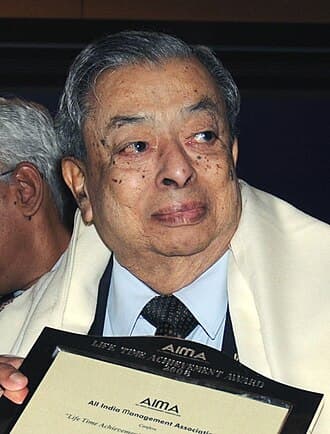
In Kurien’s lifeFarmers sold milk through middlemen and a private dairy that set the price. They did the work, and others captured the value.
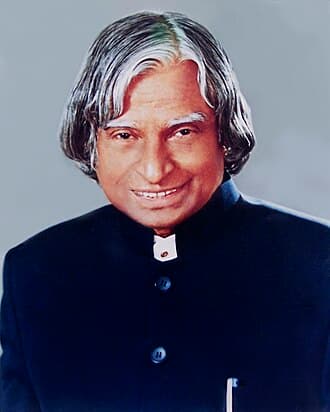
Dr A. P. J. Abdul Kalam
Where others saw a failed rocket, he saw a first draft.
Dr Verghese Kurien
Where others saw suppliers, he saw owners.
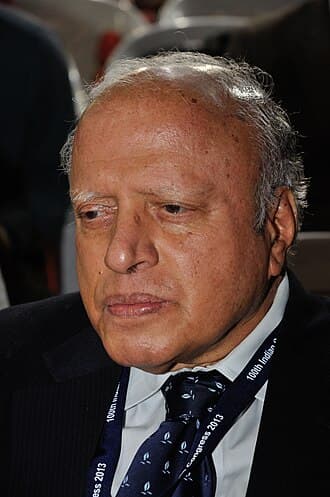
Dr M. S. Swaminathan
Where others saw one risky bet, he saw several small ones.
Each saw value in plain sight, and never staked everything on one road.
The launchpadA capability
Seeing value others overlook, and pursuing it without betting everything on one route.
Vision & Opportunity Mapping is the ability to perceive value others overlook, and to pursue it in a way that does not depend on a single outcome.
The rarest skill is not solving problems. It is noticing which ones are worth solving.
It is not the same as having ideas, or being optimistic. It is a disciplined way of looking, followed by a disciplined way of acting on what you see.
Noticing comes before judging. Most people decide what a situation means before they have finished looking at it.
Not only money: time, effort, health, dignity. Wherever any of these is being lost, value is waiting.
The best opportunities sit in plain view. They are missed because everyone has learned to stop seeing them.
A plan that only works one way is fragile. The capability builds pursuits in which several outcomes still count as progress.
02 · Why it matters
Three things are true of every opportunity that later looks obvious.
It appears as friction, waste, workarounds and quiet complaints: the things most people have learned to stop noticing.
Seeing the gap is one skill. Pursuing it through more than one route at once is another.
People who have it ask sharper questions, and build fewer single points of failure.
In a world where information is freely available, the scarce thing is no longer knowing. It is noticing what matters in what everyone already knows, and acting on it without staking everything on being right the first time.
03 · What vision looks like
One life shows all four. Tap the right side to move on, the left to go back.
He sold newspapers before school to help at home. A teacher’s lesson on how birds fly stayed with him for life.
Where it beganOne finds the door. The other makes sure there is more than one.
Most accounts of vision stop at insight. But an insight pursued along one fragile path usually dies at the first obstacle.
Recognising unmet needs and misallocated value before they are obvious to everyone else.
Where is effort being spent that nobody would choose to spend?
Designing a pursuit so that several outcomes count as progress, not just one.
If this doesn’t work, what is our next best move?
Recognising unmet needs and misallocated value before they are obvious to everyone else.
Where is effort being spent that nobody would choose to spend?
Is this how it must be, or only how it has always been?
Who would be most relieved if this disappeared?
What would I expect to see if this need is real, and do I see it?
It is the discipline of treating frustration, waste and improvisation as information. Where most people see “how things are”, the practitioner sees evidence that something could be better, and asks who would benefit if it were.
Attend to where time, money or effort is being lost, especially in steps everyone treats as normal.
Ask why something is done the way it is, and whether that reason still holds.
A gap only matters if someone feels it. Identify who, how often, and how much.
Look for evidence before building anything: workarounds, repeated complaints, willingness to pay.
06 · Watch it work
Patients arrive at eight for appointments at elevenFRICTION. Families photograph prescriptions to send to someone who can explain themWORKAROUND. By the exit, a bin fills with discharge leafletsWASTE. Elderly patients who live far away miss follow-upsOVERLOOKED. And nearly everyone now carries a smartphoneSHIFT.
Patients arrive at eight for appointments that begin at elevenFRICTION, and most bring a relative who has taken the day off workFRICTION. At the pharmacy counter, families photograph prescriptions to send to someone who can explain themWORKAROUND. By the exit, a bin fills with printed discharge leafletsWASTE. Elderly patients who live far away often miss their follow-upsOVERLOOKED. And nearly every patient now carries a smartphoneSHIFT.
Most readers see a busy, slightly inefficient hospital.
Five signals recur everywhere value is being lost:
Time, money or effort lost to a step nobody questions.
In the hospital: A three-hour wait, multiplied by a relative’s lost working day. Someone is paying heavily for a step nobody designed.
People improvising their own fix: proof the need is real.
In the hospital: Families have invented their own fix. That’s the strongest evidence of an unmet need: explanation, not just medicine.
Something valuable produced, then discarded or left idle.
In the hospital: Information produced at cost, then discarded unread. The format is failing, not the content.
People the current arrangement quietly fails to serve.
In the hospital: The patients with the greatest need are the least served by the current arrangement.
A change in technology, rules or behaviour that makes an old assumption false.
In the hospital: A new condition that makes several of the problems above newly solvable.
He arrived at a small dairy town expecting to leave within months, and stayed for a lifetime. He saw the dairy farmer not as a supplier to be squeezed, but as the owner the system had forgotten. His path follows the skill’s four moves:
Where is effort being spent that nobody would choose to spend?
Is this how it must be, or only how it has always been?
Who would be most relieved if this disappeared?
What would I expect to see if this need is real, and do I see it?
What followed
The cooperative model he built on spread across the country, and India became the world’s largest producer of milk.
Designing a pursuit so that several outcomes count as progress. Commit intelligently, not all at once.
What are three ways this could succeed?
Two-way doors deserve speed; one-way doors deserve evidence.
What would I need to see to change my mind?
When the signal arrives, commit completely.
A test worth teaching early: every decision is one of two kinds.
Deserves speed and experiment.
Deserves patience and evidence.
He helped a nation facing food shortages become self-sufficient in grain, not through a single gamble, but through careful, visible trials. Keep scrolling and watch the thread.
10 · What it isn’t
Tap each one to see what is true instead.
11 · Where it travels
The pattern behind symptoms others treat one by one.
The question nobody has thought to ask.
The user the specification forgot.
Who a system quietly leaves out.
Mispriced value before the consensus.
Something people were already improvising.
More lives that show it
Showed that most soldiers in her hospital were dying of preventable disease, not wounds, and made the evidence impossible to ignore.
Imagined a space programme for a young nation’s everyday needs (communication, weather, education) when others saw only prestige.
Tested hundreds of small wing models in a home-made wind tunnel before risking a single powered flight.
12 · How we develop it
An observation journal that records signals, not opinions.
Read move by move, alongside conversations with leaders about gaps they once saw.
Each move practised in isolation, with feedback on the quality of questions.
Every cycle ends in a documented analysis, so progress is visible over time.
PerceiveValidateCreate
How it grows
Learns to see signals, and to write them down precisely instead of complaining about them.
Checks that a gap is real: who has it, how often, and what it costs them.
Works with a real organisation on a measurable change, with more than one route to success.
One cycle, four weeks
13 · Try it yourself
Each place holds one note from a child’s observation journal. Tap a place, name the signal, then see how the same moment reads with and without the capability. Take sixty seconds, or as long as you like.

15 · To keep
Vision is specific, long-range, survives failure, and is shared.
Value hides in friction, workarounds, waste, the overlooked, and shifts.
Perception comes before ideas.
Small bets first; commit on evidence.
All of it can be trained.
The next step
Every child leans towards some capabilities before they’re ever taught. The Discovery Profile finds where yours already leads, across all eight, in five minutes.
Discover their profile Explore the full launchpadNext capabilityRelational Capital & Power Dynamics