Influence is rarely where the organisation chart says it is.
It is not networking, flattery or collecting contacts. It is earning trust honestly, and understanding a group well enough to work with it rather than against it.
Trust
The belief that someone will do what they said, and act well when nobody is checking. It cannot be requested; only earned.
That lasts
A relationship kept for years carries weight that no introduction can. Its value compounds, like interest.
Influence
The power to shape a decision without necessarily making it: by being consulted, trusted, or deferred to.
Actually flows
Every group has two structures: the one written down, and the one people follow. The second is the one that decides.
02 · Why it matters
Doors open through people.
Three things are true wherever something important gets done.
01 / 03
Trust compounds.
A relationship kept honestly for years is worth more than a hundred introductions made in a week.
02 / 03
Two halves: trust and terrain.
Building relationships is one skill. Reading who holds influence, and why, is another.
03 / 03
Power is rarely where the chart says.
Decisions are shaped by who is consulted, who controls the agenda, and who can quietly say no.
Ability opens the first door. After that, most of what a person achieves passes through other people: who vouches for them, who invites them in, who warns them early. Those relationships are built long before they are needed, and they are built on character, not charm.
03 · What it looks like
Relational capital isn’t charm. It has four visible traits.
Earned
Reads the terrain
Crosses lines
Compounds
One life shows all four. Tap the right side to move on, the left to go back.
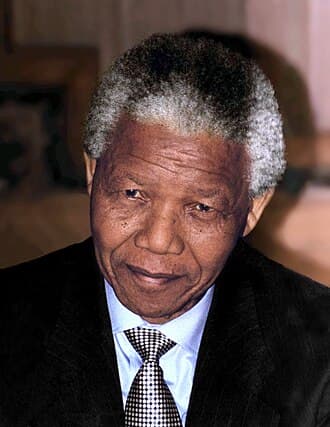
Nelson Mandela1918–2013 · Lawyer, prisoner, President
1930s
Raised among counsel
He grew up at the court of the Thembu regent, and watched him listen to every voice before speaking last.
Where it began
Nelson Mandela1918–2013 · Lawyer, prisoner, President
1944–52
A circle of trust
He helped found the ANC Youth League and opened a law practice with Oliver Tambo, a partnership that lasted a lifetime.
Trait · Earned
Nelson Mandela1918–2013 · Lawyer, prisoner, President
1964–82
Learning the other side
In prison he learned Afrikaans and studied Afrikaner history, and treated his warders with courtesy. Several became friends.
Trait · Crosses lines
Nelson Mandela1918–2013 · Lawyer, prisoner, President
1985–90
Talks before talks
Still a prisoner, he opened quiet talks with government ministers, knowing exactly who could move the rest.
Trait · Reads the terrain
Nelson Mandela1918–2013 · Lawyer, prisoner, President
1994
A government of former enemies
As President he formed a Government of National Unity, with his predecessor F. W. de Klerk as a deputy.
Trait · Compounds
Nelson Mandela1918–2013 · Lawyer, prisoner, President
1995
The green jersey
At the Rugby World Cup final he wore the jersey of a team long seen as a symbol of the old order, and won a stadium over.
Trait · Crosses lines
The four traitsEarned: built through years of promises kept. Reads the terrain: knows who holds power, and why. Crosses lines: builds trust with rivals and opponents. Compounds: relationships that pay back decades later.
04 · Two skills, one capability
One earns the trust. The other knows whose trust matters.
Goodwill spread evenly is goodwill wasted. A person trusted by many, but not by the few who decide, still waits outside.
Skill 01 · Trust
Asymmetric Trust Architecture
Cultivating relationships of mutual benefit that deepen and compound over years.
What have I given to this relationship lately?
Skill 02 · Terrain
Strategic Decision-Network Mapping
Reading how influence really flows in a group, and who shapes decisions behind the scenes.
Who really decides here, and whom do they listen to?
05 · Skill one · Trust
Skill 01
Asymmetric Trust Architecture
Cultivating relationships that deepen over years, built on generosity and promises kept.
Skill 01 · Four moves
Asymmetric Trust Architecture
1
Give before you ask
What can I offer first, with nothing expected back?
2
Keep small promises
Have I done exactly what I said I would?
3
Turn rivals into allies
Whom have I written off who could become an ally?
4
Let it compound
Which relationship, kept for years, could matter most later?
Trust is built the way a reputation is: in small promises kept, repeated over years. The practitioner invests before there is anything to ask for, so that when help is needed, it is already there.
1 · Give before you ask
Share knowledge, time or an introduction early. The first contribution sets the character of the relationship.
2 · Keep small promises
Reliability in small things is how people judge whether to trust you in large ones. Under-promise, then deliver.
3 · Turn rivals into allies
A rival who is treated with respect, and given a way to cooperate, often becomes the most loyal supporter of all.
4 · Let it compound
Stay in touch without an agenda. Relationships that are tended when nothing is needed carry weight when something is.
A common confusionGenerosity here is not a tactic. People can tell a favour done in order to collect one. The relationships that last are the ones valued for their own sake, which is also why they end up being the most useful.
06 · A life built on trust
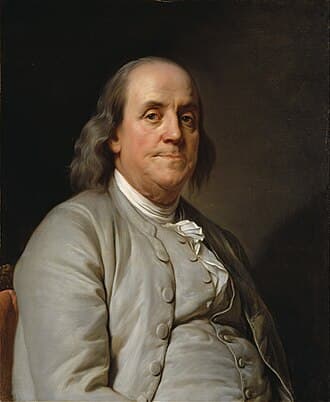
Benjamin Franklin1706–1790 · Printer, scientist, statesman
He arrived as a runaway apprentice with almost nothing, and became one of the most trusted people of his century. He treated every relationship as something to invest in, not to spend. His path follows the skill’s four moves:
Move 1 of 4
Give before you ask
What can I offer first, with nothing expected back?
In Franklin’s lifeAt twenty-one he formed the Junto, a club of tradesmen who met weekly to improve one another. They pooled their books, and that shared shelf became a public library.
Move 2 of 4
Keep small promises
Have I done exactly what I said I would?
In Franklin’s lifeAs a young printer he paid his debts on time and delivered what he promised. The reputation brought him the colony’s official printing.
Move 3 of 4
Turn rivals into allies
Whom have I written off who could become an ally?
In Franklin’s lifeA rival in the assembly opposed him. Franklin asked to borrow a rare book from him, returned it with warm thanks, and the man became a friend for life.
Move 4 of 4
Let it compound
Which relationship, kept for years, could matter most later?
In Franklin’s lifeDecades of friendships in France carried weight when it mattered most: in 1778 France signed an alliance with the new American republic.
What followed
He treated every relationship as something to invest in, not to spend.
The circle he built as a young tradesman went on to found a library, a fire company, an academy and a hospital, all of which outlived him.
07 · Skill two · Terrain
Skill 02
Strategic Decision-Network Mapping
Reading the invisible architecture of a group: who truly decides, who advises, and who can quietly say no.
Skill 02 · Four moves
Strategic Decision-Network Mapping
1
Find who decides
Who can actually say yes, and who can say no?
2
Trace the influence
Whose opinion does the decision-maker wait for?
3
Read the interests
What does each of them want, and what do they fear?
4
Choose the approach
In what order, and through whom, should I make my case?
Every group runs on two structures at once. The practitioner draws the second one, honestly and without cynicism, before trying to change anything.
Formal powerOn paper.
Titles, roles and signatures.
Informal powerIn practice.
Who is consulted, trusted and deferred to.
A common confusionMapping power is often mistaken for manipulation. It is closer to courtesy: understanding what each person needs, and bringing them a proposal they can accept with dignity.
08 · Watch it work
Read it as you normally would. Then keep scrolling.
The principal chairs the committee, but everyone glances at the senior science teacher before they voteDEFERENCE. The office manager decides which items make the agendaGATEKEEPER. The accounts clerk has never proposed anything, yet no plan survives without his sign-offQUIET VETO. Most questions are settled in the staffroom the day beforeSIDE CHANNEL. And the sports teacher and the parents’ association both want the old field repairedSHARED STAKE.
1Deference
2Gatekeepers
3Quiet vetoes
4Side channels
5Shared stakes
A school committee, describedReading
The principal chairs the committee, but everyone glances at the senior science teacher before they voteDEFERENCE, and nobody has ever voted against her. The office manager decides which items make the agendaGATEKEEPER and which papers are circulated in advanceGATEKEEPER. The accounts clerk has never proposed anything, yet no plan survives without his sign-off on costsQUIET VETO. Most questions are settled in the staffroom the day before the meetingSIDE CHANNEL. And the sports teacher and the parents’ association both want the old field repairedSHARED STAKE, though neither knows the other does.
Most readers see an ordinary committee, run by its chair.
Five signals show where influence really sits:
1
Deference
Whose opinion others wait for before they commit.
On the committee: The chair has the title, but the room waits for the senior teacher. Her view is the one that moves votes.
2
Gatekeepers
Who controls access: the agenda, the calendar, the information.
On the committee: An idea that never reaches the agenda is never decided. Whoever shapes the agenda shapes the outcome.
3
Quiet vetoes
Someone who cannot start things, but can stop them.
On the committee: The clerk proposes nothing, yet every plan must pass him. Ignore him and a good plan dies on a spreadsheet.
4
Side channels
Where decisions are really made, before the formal moment.
On the committee: By the time the meeting starts, the question has been settled. The staffroom is the real meeting.
5
Shared stakes
People whose interests overlap, and could act together.
On the committee: Two groups want the same thing and don’t know it. Introduced, they become a coalition.
09 · A life built on reading power
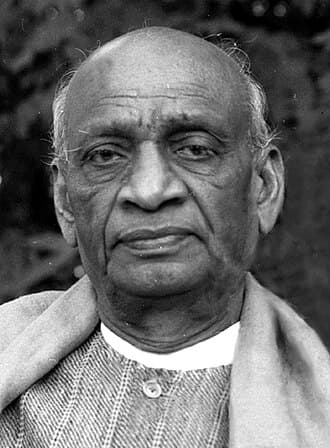
Sardar Vallabhbhai Patel1875–1950 · Statesman, first Deputy Prime Minister
1918: Learning the ground. A successful lawyer, he left his practice to go village to village with farmers facing a revenue demand they could not pay after a failed harvest. He learned whom each village trusted. The move: Where it began.
1928: Find who decides. In a peasant campaign against a steep tax rise, he organised through the respected elders of each village, whose word held their neighbours together. The farmers gave him the title Sardar, leader. The move: Find who decides.
1937–46: Trace the influence. As the party’s chief organiser he kept a working map of every province: who carried weight, whom they listened to, and whose loyalty rested on what. The move: Trace the influence.
1947: Read the interests. With his secretary V. P. Menon he studied the rulers one by one: what each valued, who advised them, what they feared. The accession asked only for defence, foreign affairs and communications. The move: Read the interests.
1947–49: Choose the approach. Respected rulers who joined early brought others with them, and he met the hesitant ones in person. By the middle of 1949 more than five hundred states had become one union. The move: Choose the approach.
1918
Learning the ground
A successful lawyer, he went village to village alongside farmers facing a tax they could not pay.
The moveWhere it began
191819371947–49
At independence, more than five hundred princely states could have gone their own way. He brought them into one union in about two years, largely by knowing whom to approach, in what order, with what offer. Keep scrolling and watch the rings grow.
1918
Learning the ground
A successful lawyer, he left his practice to go village to village with farmers facing a revenue demand they could not pay after a failed harvest. He learned whom each village trusted.
Move · Where it began
10 · What it isn’t
Four common misreadings.
Tap each one to see what is true instead.
11 · Where it travels
Every serious field runs on it.
Medicine
Whether a new practice spreads depends on whom the ward trusts.
Research
Collaborations that outlast any single grant.
Diplomacy
Who must be consulted before anyone agrees.
Public service
The quiet vetoes inside every institution.
Law
Reading the people in a case as well as the facts.
Enterprise
Partners who vouch, and customers who return.
More lives that show it
Science · 1920sNiels Bohr
Built an institute where young physicists from rival nations worked side by side, and the trust formed there shaped a generation of physics.
Diplomacy · 1950sDag Hammarskjöld
As UN Secretary-General he practised “quiet diplomacy”: private trust with every side, earned before any public step.
Science · 1940sDr Homi J. Bhabha
A single letter to an industrialist who already trusted him became the country’s first institute for fundamental research.
12 · How we develop it
Trained the way experts train.
01A relationship journal
Who they met, what was offered, what was promised, and whether it was kept.
02Lives, studied closely
Read move by move, alongside conversations with leaders about how decisions were really made.
03Mapping exercises
Honest maps of real groups: a club, a committee, a team they belong to.
04Reflection and portfolio
Every cycle ends in a documented map and plan, so progress is visible over time.
Connect→Understand→Mobilise
How it grows
Earn. Read. Enlist.
1Earn
Keeps small promises, gives before asking, and learns what reliability feels like from the other side.
2Read
Draws an honest map of how a real group decides: who is consulted, who can say no.
3Enlist
Gathers the right support, in the right order, for a real project with a real organisation.
One cycle, four weeks
Week 1ConceptA contact vs a relationship.
Week 2EncounterA leader explains how a decision was really made.
Week 3ExerciseMap one group: who decides, who advises.
Week 4ReflectionPlan an approach, in order.
13 · Try it yourself
Four places. Who really decides?
Each place holds one note from a child’s observation journal. Tap a place, name the signal, then see how the same moment reads with and without the capability. Take sixty seconds, or as long as you like.
Infusion Leaders coachAsk me anything about Relational Capital & Power Dynamics. These are the questions parents ask most.
Isn’t this just networking?
Networking collects contacts. This builds a few relationships worth keeping, and an honest understanding of how groups decide.
Is “power” the right thing to teach a child?
Every group has a way decisions are really made. Children who can see it are less easily left out, and better at speaking up for others.
My child is quiet. Is this for them?
Often more than for anyone. The skill rewards listening, keeping promises and patience, not being the loudest in the room.
How can progress be seen?
Through their maps of real groups and the relationships they keep, recorded in a journal over months.
What can we do at home?
Ask two questions often: “Who really decided that, and how do you know?” and “What have you done for someone lately, with nothing expected back?”
15 · To keep
If you remember five things.
1 / 5
Trust is earned in small promises kept.
2 / 5
Give before you ask; stay in touch without an agenda.
3 / 5
Influence hides in deference, gatekeepers, quiet vetoes, side channels and shared stakes.
4 / 5
Find who decides before you make your case.
5 / 5
All of it can be trained.
The next step
Whom does your child already bring together?
Every child leans towards some capabilities before they’re ever taught. The Discovery Profile finds where yours already leads, across all eight, in five minutes.