Amateurs rely on effort. Professionals rely on systems.
It is not busyness, working late, or heroic last-minute rescues. It is the quieter discipline of making good results ordinary.
Reliably
Once is luck. Every time is a capability. The test of execution is the ordinary day, not the special one.
Systems that repeat
A system is a way of working written down, so that it no longer depends on memory, mood or heroics.
Coordinate
Most real work has many parts and many people. Someone has to see the whole, and the order it must happen in.
Limited resources
Time, money and energy are never enough for everything. Deciding where they go is part of the work, not a distraction from it.
02 · Why it matters
Ideas are plentiful. Delivery is rare.
Three things are true of everything that actually gets done.
01 / 03
Most plans fail in execution.
The gap between a good idea and a real result is filled with sequencing, checking and follow-through.
02 / 03
Systems beat heroics.
A team that depends on one hero fails when the hero is tired. A good system works on an ordinary day.
03 / 03
Resources are always limited.
Time, money and energy never stretch to everything. Choosing where they go is itself the work.
Many talented people are remembered for what they started. The ones who change things are remembered for what they finished. Between the two lies an unglamorous craft: breaking work into parts, putting the parts in order, and spending scarce resources where they matter.
03 · What execution looks like
Execution isn’t hustle. It has four visible traits.
Measured
Systematic
Resourceful
Relentless
One life shows all four. Tap the right side to move on, the left to go back.
She founded a training school for nurses and, often from her sickbed, kept reforming hospitals for four decades.
Trait · Relentless
The four traitsMeasured: counts what matters, and acts on the count. Systematic: fixes the routine, not just the day. Resourceful: does the most with what is available. Relentless: follows through for years, not weeks.
04 · Three skills, one capability
One makes it repeatable. One makes the parts move together. One puts every hour where it counts.
Systems without coordination stall. Coordination without resources runs dry. Resources without systems leak away.
Skill 01 · Systems
Machine-State Architecture
Turning chaotic effort into simple, repeatable processes that deliver the same quality every time.
Could a newcomer follow this without asking?
Skill 02 · Coordination
Dynamic Critical-Path Orchestration
Coordinating projects with many moving parts, from the first plan to final delivery.
What must happen before what?
Skill 03 · Allocation
Asymmetric Capital Deployment
Deciding where limited time, money and energy go, for the greatest return.
Where does each hour do the most good?
05 · Skill one · Systems
Skill 01
Machine-State Architecture
Turning chaotic, repeated effort into a simple process that works the same way every time.
Skill 01 · Four moves
Machine-State Architecture
1
Find the repeat
What happens again and again, and could be done the same way each time?
2
Make it simple
Could a newcomer follow this without asking?
3
Build in checks
Where would an error be caught before it matters?
4
Fix the system, not the person
When something goes wrong, what in the system allowed it?
The practitioner notices what keeps happening, and stops solving it afresh each time. A good system is simple enough for a newcomer to follow, and it checks itself.
1 · Find the repeat
Look for the scramble that recurs. Anything done more than twice deserves a routine.
2 · Make it simple
Write the routine in the fewest, plainest steps. Complexity is where errors hide.
3 · Build in checks
Place checks at handovers, where most mistakes happen, rather than only at the end.
4 · Fix the system, not the person
Blame fixes one day. A change to the system fixes every day after it.
A common confusionA system is not bureaucracy. Bureaucracy adds steps to protect the organisation; a good system removes them to protect the result.
06 · Watch it work
Read it as you normally would. Then keep scrolling.
Every morning the canteen runs out of plates at the same momentREPEAT SCRAMBLE. Only one cook knows how the dal is madeSINGLE POINT OF FAILURE. The whole queue waits at the single tillBOTTLENECK. Orders written on scraps are often made twiceREWORK. And nobody knows how many lunches are left until they run outINVISIBLE STATUS.
1Repeat scrambles
2Single points of failure
3Bottlenecks
4Rework
5Invisible status
A school canteen, describedReading
Every morning the canteen runs out of plates at the same momentREPEAT SCRAMBLE, and someone runs to wash more, just as they did yesterdayREPEAT SCRAMBLE. Only one cook knows how the dal is madeSINGLE POINT OF FAILURE, and she is away on Fridays. The whole queue waits at the single tillBOTTLENECK while two servers stand idle. Orders written on scraps are often made twiceREWORK. And nobody knows how many lunches are left until they run outINVISIBLE STATUS.
Most readers see a busy canteen having a hard morning.
Five signals show where a system is missing:
1
Repeat scrambles
The same problem, solved from scratch every time.
In the canteen: Plates run out at the same moment every day. A problem that predictable needs a routine, not a rush.
2
Single points of failure
Work that depends on one person or one thing.
In the canteen: When the one cook is away, the dish disappears. Knowledge kept in one head is a risk.
3
Bottlenecks
One step that everything else waits for.
In the canteen: The till sets the pace for the whole canteen, while other hands stand idle.
4
Rework
The same work done twice because the first time was unclear.
In the canteen: Scrap-paper orders get lost or repeated. A clear way of recording them would save food and time.
5
Invisible status
Nobody can see where things stand until it is too late.
In the canteen: If the count of lunches were visible, the shortage could be seen, and solved, before it happened.
07 · A system built to last
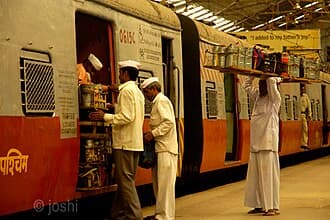
The dabbawalasSince 1890 · A lunch delivery network
Every working day, thousands of carriers move home-cooked lunches across one of the world’s most crowded cities, and bring the empty boxes back. They built a system so simple that it almost never fails. It follows the skill’s four moves:
Move 1 of 4
Find the repeat
What happens again and again, and could be done the same way each time?
In the dabbawalas’ systemLunches cooked at home must reach offices across a vast city by lunchtime, and return empty by evening. The same journey, repeated for more than a century.
Move 2 of 4
Make it simple
Could a newcomer follow this without asking?
In the dabbawalas’ systemEach box carries a short code of colours, numbers and letters that any carrier can read at a glance, whether or not they read much else.
Move 3 of 4
Build in checks
Where would an error be caught before it matters?
In the dabbawalas’ systemBoxes are sorted and re-sorted at every station, and carriers check one another at each handover.
Move 4 of 4
Fix the system, not the person
When something goes wrong, what in the system allowed it?
In the dabbawalas’ systemNo single carrier is a hero. If one is absent, the group covers the route: the system, not the individual, keeps the promise.
What followed
They built a system so simple that it almost never fails.
Some five thousand carriers move around two hundred thousand lunches a day, with errors so rare that management schools study how they do it.
08 · Skill two · Coordination
Skill 02
Dynamic Critical-Path Orchestration
Coordinating many people and parts so that the right things happen, in the right order, on time.
Skill 02 · Four moves
Dynamic Critical-Path Orchestration
1
Break it into parts
What are the pieces, and who owns each one?
2
Sequence the dependencies
What must happen before what?
3
Adapt at checkpoints
What has changed, and what must change with it?
4
Work from one plan
Is everyone working from the same, current plan?
Every project has a hidden order. The practitioner makes it visible: who owns each part, what depends on what, and where the plan will be checked.
A planWritten once.
Out of date by the first surprise.
PlanningDone continuously.
Adapts at every checkpoint.
A common confusionOrchestration is often mistaken for control. The conductor plays no instrument. The job is to let every part do its best work, at the right moment, together.
09 · Orchestration under pressure
Apollo 13 Mission ControlApril 1970 · NASA flight controllers and engineers
13 April 1970: The plan is gone. Nearly 56 hours into the mission, an oxygen tank exploded. The Moon landing was lost at once, and the command module was bleeding power and oxygen. The move: Where it began.
Hour 1: Break it into parts. The flight controllers split the crisis into separate problems, each owned by a team: power, oxygen, the route home, water. Nobody tried to solve everything at once. The move: Break it into parts.
13–14 April: Sequence the dependencies. Order was everything. The lunar module had to be powered up as a lifeboat before the command module was shut down, and engine burns timed to swing the craft around the Moon and home. The move: Sequence the dependencies.
15 April: Adapt at checkpoints. Carbon dioxide began to build up. Engineers on the ground designed an adapter from items the crew had on board, and read up the steps one by one. The move: Adapt at checkpoints.
17 April: Work from one plan. A restart sequence that had never been attempted was written and tested in simulators in about three days, then read up line by line. On 17 April the crew splashed down safely. The move: Work from one plan.
13 April 1970
The plan is gone
An explosion, far from Earth. The Moon landing is lost; so, nearly, is the crew.
The moveWhere it began
13 April15 April17 April
Two days from Earth, an oxygen tank exploded. The team on the ground had four days to bring three astronauts home in a crippled spacecraft. Keep scrolling and watch the rings grow.
13 April 1970
The plan is gone
Nearly 56 hours into the mission, an oxygen tank exploded. The Moon landing was lost at once, and the command module was bleeding power and oxygen.
Move · Where it began
10 · Skill three · Allocation
Skill 03
Asymmetric Capital Deployment
Deciding where limited time, money and energy should go, so that each unit does the most good.
Skill 03 · Four moves
Asymmetric Capital Deployment
1
Know what you have
What exactly is available: time, money, people, energy?
2
Rank by return
Where does each unit do the most good?
3
Protect the essential
What must never run short?
4
Reallocate as you learn
What should move, now that we know more?
Resources are always short. The practitioner ranks, protects and moves them deliberately, rather than spreading them evenly or spending them on whatever is loudest.
A common confusionAllocation is often confused with saving. Spending too little on what matters is as costly as spending too much on what does not.
11 · A life built on allocation
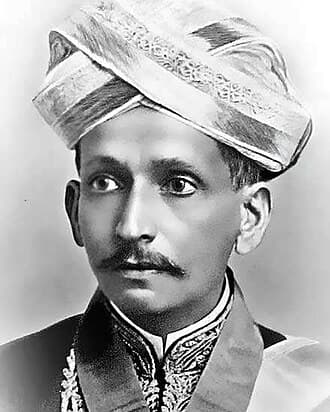
Sir M. Visvesvaraya1861–1962 · Engineer, statesman
In dry country where every drop of water mattered, he became the engineer who could make scarce resources go further. He treated water, money and time as things to be placed where they would do the most good. His path follows the skill’s four moves:
Move 1 of 4
Know what you have
What exactly is available: time, money, people, energy?
In Visvesvaraya’s workHe began by measuring: how much water the rivers carried, when it came, and who depended on it.
Move 2 of 4
Rank by return
Where does each unit do the most good?
In Visvesvaraya’s workHis block system of irrigation rotated water between blocks of farmland, so that more farmers received enough, rather than a few receiving too much.
Move 3 of 4
Protect the essential
What must never run short?
In Visvesvaraya’s workHis automatic sluice gates stored more water behind existing dams, and opened on their own before the dam itself was at risk.
Move 4 of 4
Reallocate as you learn
What should move, now that we know more?
In Visvesvaraya’s workAs chief minister of a princely state, he moved its money towards what would compound: schools, industries, a bank and a university.
What followed
He treated water, money and time as things to be placed where they would do the most good.
His birthday, 15 September, is celebrated each year as Engineers’ Day. He received the Bharat Ratna in 1955.
12 · What it isn’t
Four common misreadings.
Tap each one to see what is true instead.
13 · Where it travels
Every serious field runs on it.
Medicine
Checklists that make surgery safer every day.
Engineering
Projects delivered on time, to the millimetre.
Disaster relief
The right supplies, in the right place, first.
Public service
Services that work on an ordinary Tuesday.
Research
Experiments run the same way, so results can be trusted.
Enterprise
Operations that grow without breaking.
More lives that show it
Public health · 1960s–70sDr D. A. Henderson
Led the worldwide campaign that eradicated smallpox, by tracing each outbreak and vaccinating the ring of people around it.
Aviation · 1930sJ. R. D. Tata
Flew the first airmail service himself in 1932, and built an airline known for running exactly on time.
Engineering · 1860sSir Joseph Bazalgette
Built the sewers of a capital city, doubled the pipe sizes to be safe, and ended its cholera epidemics. Much of it still works.
14 · How we develop it
Trained the way experts train.
01A process notebook
Each routine written down, tested by someone else, and improved.
02Lives, studied closely
Read move by move, alongside visits to operations that run every day.
03A real operation
Children plan and run a real event, with real budgets and deadlines.
04Reflection and portfolio
Every cycle ends in a documented review, so progress is visible over time.
Organise→Coordinate→Allocate
How it grows
Repeat. Coordinate. Choose.
1Repeat
Turns one messy recurring task into a written routine that anyone could follow.
2Coordinate
Runs a project with several people and dependencies, keeping one shared plan.
3Choose
Manages a real budget of time and money, and explains where every part went, and why.
One cycle, four weeks
Week 1ConceptA habit vs a system.
Week 2EncounterAn operations leader shows how their work runs.
Week 3ExerciseWrite and test one routine.
Week 4ReflectionBudget the next project.
15 · Try it yourself
Four places. What would a system fix?
Each place holds one note from a child’s observation journal. Tap a place, name the signal, then see how the same moment reads with and without the capability. Take sixty seconds, or as long as you like.
Infusion Leaders coachAsk me anything about Operational Execution & Resource Management. These are the questions parents ask most.
Isn’t this just being organised?
Being organised is a personal habit. This is designing ways of working that other people can follow, and that keep working when things go wrong.
Will this make my child rigid?
The opposite. Good systems handle the routine, which frees attention for the unexpected, and the skill includes adapting plans at checkpoints.
What real responsibility will they have?
Real events, real budgets and real deadlines, sized for their age, with mentors watching closely.
How can progress be seen?
Through their process notebooks, project plans and budgets, and how smoothly each event runs compared with the last.
What can we do at home?
Pick one recurring family scramble, such as school mornings, and ask your child to design a routine for it. Then ask: “What would make it work every time?”
17 · To keep
If you remember five things.
1 / 5
Systems beat heroics.
2 / 5
Repeat scrambles, single points of failure and bottlenecks are signals.
3 / 5
Sequence the work, and keep one shared plan.
4 / 5
Put limited resources where they do the most good.
5 / 5
All of it can be trained.
The next step
Where does your child already make things work?
Every child leans towards some capabilities before they’re ever taught. The Discovery Profile finds where yours already leads, across all eight, in five minutes.