
Look past the surface
What can this person do, however they present?
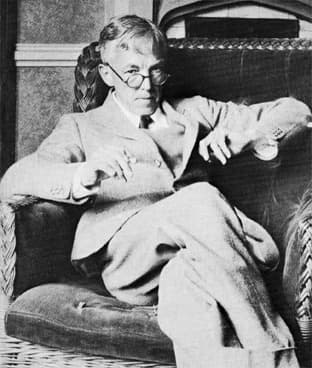
In Hardy’s judgementIn 1913 a letter arrived from an unknown clerk in India with no degree: he had failed his college exams. It held pages of formulas and no proofs.
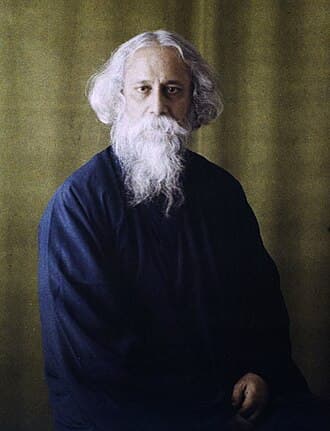
Rabindranath Tagore
Where others saw pupils to be drilled, he saw minds to be set free.
G. H. Hardy
Where others saw a stranger’s odd letter, he saw a genius.
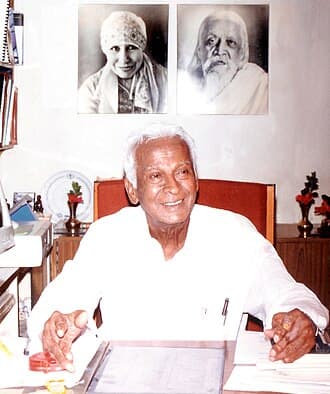
Dr G. Venkataswamy
Where others saw patients too poor to pay, he saw a system that could serve them all.
Each saw ability where others saw none, and built a place for it to grow.
The launchpadA capability
Recognising ability in others, helping it grow, and building places where people do their best work.
Human Capital & Behavioral Design is the ability to recognise ability in others, help it grow, and design surroundings in which people naturally do their best work.
Talent is common. Places that let it grow are rare.
It is not bossing people, rewarding favourites or running a points table. It is noticing what people can do, helping them do more of it, and arranging things so that the right behaviour is also the easy one.
Ability rarely looks the way it is expected to. It shows in how someone works, not in how they present themselves.
People improve fastest with high standards, specific feedback and someone who believes they can meet them.
Behaviour follows surroundings: what is easy, what is noticed, what is rewarded. Change those, and behaviour follows.
The best systems need no constant pushing. They make good work the path of least resistance.
02 · Why it matters
Three things are true wherever people do their best work.
The most capable person in a group is often not the most confident, the most popular or the best-credentialed.
Some people make everyone around them better. It is a skill, and it can be learned.
Change what is easy, visible and rewarded, and people change what they do, without being told.
No one achieves anything large alone. The leaders who matter most are rarely the most talented people in the room. They are the ones who find talent in others, raise it, and build places where it keeps growing after they have gone.
03 · What it looks like
One life shows all four. Tap the right side to move on, the left to go back.
He found the classroom a prison of rote learning and left formal schooling early, learning at home, outdoors and through music.
Where it beganOne finds the talent. One helps it grow. One builds the place where it thrives.
Finding talent without growing it wastes it. Growing it in the wrong surroundings loses it. The capability needs all three.
Spotting real ability and drive in others, often long before it is obvious to anyone else.
What does their actual work show?
Raising the performance of a whole team, so that ordinary people achieve extraordinary, reliable results.
Who could do my job one day, and am I teaching them?
Designing systems and surroundings that align with real human motivation, so the right behaviour comes naturally.
Are we rewarding the behaviour we actually want?
Spotting real ability and drive in others, long before results or reputation make it obvious.
What can this person do, however they present?
What does their actual work show?
What do they do when nobody asks them to?
What small, real opportunity would show what they can do?
The practitioner judges the work, not the presentation. Confidence, polish and popularity are easy to see and only loosely related to ability. Effort, questions and learning speed are harder to see, and far more telling.
Set aside credentials, confidence and polish for a moment. Ask only what the person can actually do.
Judge from what someone produces and how they produce it, not from how they describe it.
Unrequired effort is the clearest sign of real interest, and interest is what sustains ability over years.
Ability is best confirmed by a genuine task with genuine stakes, not by an interview or a test.
06 · Watch it work
At the science club, one quiet student stays behind to redo an experiment nobody will markUNASKED EFFORT. Her questions are the ones the teacher has to look upSHARP QUESTION. When a circuit fails, the others quietly go to herQUIET PULL. After a wrong answer she asks why, and does not make it againQUICK RECOVERY. And her notebook is untidy, but every measurement in it is rightSUBSTANCE OVER POLISH.
At the science club, one quiet student stays behind to redo an experiment nobody will markUNASKED EFFORT, and has borrowed the teacher’s old textbook to read aheadUNASKED EFFORT. Her questions are the ones the teacher has to look upSHARP QUESTION. When a circuit fails, the others quietly go to herQUIET PULL rather than to the club captain. After a wrong answer she asks why, and does not make it againQUICK RECOVERY. And her notebook is untidy, but every measurement in it is rightSUBSTANCE OVER POLISH.
Most readers see a shy student with an untidy notebook.
Five signals reveal ability before it is obvious:
Work done because the person wants to, not because anyone requires it.
In the science club: Redoing an unmarked experiment is interest, not duty. Interest is what keeps ability growing for years.
Questions that go past the lesson, to the edge of what is known.
In the science club: A question the teacher must look up shows someone already thinking beyond the syllabus.
Others turn to them for help, whatever their title.
In the science club: Peers know who can actually fix things. Their choice is better evidence than any title.
Mistakes become lessons, and are not repeated.
In the science club: Asking why, then never repeating the error, is how the fastest learners learn.
The work is better than its presentation.
In the science club: Tidy notebooks are easy to see. Correct measurements are what matter, and she has them.
One of the most celebrated partnerships in mathematics began with a letter most experts would have thrown away. Hardy looked past the missing degree to the work itself. His judgement follows the skill’s four moves:
What can this person do, however they present?
What does their actual work show?
What do they do when nobody asks them to?
What small, real opportunity would show what they can do?
What followed
Ramanujan died at thirty-two. Mathematicians are still proving, and using, the results in his notebooks today.
Raising the performance of everyone around you, so that a team becomes more than the sum of its members.
What would excellent look like here, specifically?
What exactly should they do differently next time?
Where does each person’s strength help the team most?
Who could do my job one day, and am I teaching them?
One way to tell two kinds of leader apart: watch what happens to everyone else.
Decides everything, answers every question.
Sets the bar high, then helps people reach it.
He took over a national team full of natural skill and little structure, and in thirteen years made it one of the strongest in Asia. Keep scrolling and watch the rings grow.
Designing surroundings where the right behaviour is the natural one, because the system works with human motivation.
What does each person actually care about?
What makes the good choice harder than it needs to be?
Can people see the effect of their work?
Are we rewarding the behaviour we actually want?
Behaviour follows surroundings. The practitioner asks what the setting makes easy, visible and rewarded, and changes that, rather than lecturing people to try harder.
He retired at fifty-eight with crippled hands, and opened an eleven-bed eye hospital. He designed it so that serving the poor well was also what kept it running. His path follows the skill’s four moves:
What does each person actually care about?
What makes the good choice harder than it needs to be?
Can people see the effect of their work?
Are we rewarding the behaviour we actually want?
What followed
The eleven-bed hospital grew into one of the largest eye-care systems in the world, performing hundreds of thousands of surgeries every year.
12 · What it isn’t
Tap each one to see what is true instead.
13 · Where it travels
Training the next surgeons, one case at a time.
The teacher who sees what a report card cannot.
Spotting ability before it shows in results.
Laboratories where students outgrow their mentors.
Services designed around how people really behave.
Teams that keep improving without being pushed.
More lives that show it
Watched how children actually learn, then redesigned the classroom around it: low shelves, real tools, and freedom within order.
Led laboratories from which many of his students and colleagues went on to win Nobel Prizes of their own.
With Jyotirao Phule she opened a school for girls in 1848, seeing ability where society saw none worth teaching.
14 · How we develop it
What peers do well, recorded as evidence, not impressions.
Read move by move, alongside conversations with coaches and teachers about people they discovered.
Each child coaches a peer in a skill, and is coached in turn.
Every cycle ends in a documented redesign, so progress is visible over time.
SpotGrowDesign
How it grows
Describes what someone does well in specific, evidence-based terms, not in praise.
Coaches a peer with a clear standard and specific feedback, and watches them improve.
Redesigns a real routine in a club or team so that the right behaviour becomes the easy one.
One cycle, four weeks
15 · Try it yourself
Each place holds one note from a child’s observation journal. Tap a place, name the signal, then see how the same moment reads with and without the capability. Take sixty seconds, or as long as you like.

17 · To keep
Talent is often disguised; look at the work.
Unasked effort, sharp questions and quiet pull reveal ability early.
High standards with specific feedback make people grow.
Make the right thing the easy thing.
All of it can be trained.
The next step
Every child leans towards some capabilities before they’re ever taught. The Discovery Profile finds where yours already leads, across all eight, in five minutes.
Discover their profile Explore the full launchpadNext capabilityOperational Execution & Resource Management