

Name the shortcut
Which mental shortcut might be at work here?
In Feynman’s thinkingHe named a common trap “cargo cult science”: research that copies the outward form of science without its honesty.
Daniel Kahneman
Where others saw rational choosers, he saw minds taking shortcuts.
Richard Feynman
Where others saw an expert’s certainty, he saw the first thing to check.
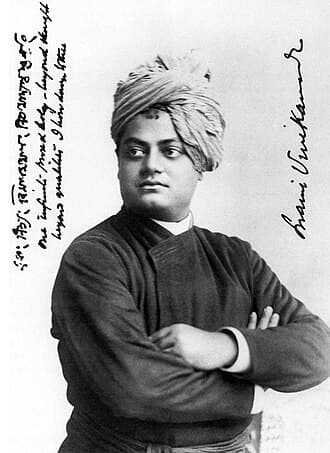
Swami Vivekananda
Where others saw a hall of strangers, he saw sisters and brothers.
Each understood how minds judge, their own included, and what it takes to be seen truly.
The launchpadA capability
Understanding how minds judge, including your own, and being seen accurately for what you can do.
Cognitive Psychology & Perception is the ability to understand the mental shortcuts that shape judgement, in others and in yourself, and to be seen accurately for who you are and what you can do.
Everyone has biases. The advantage belongs to those who know their own.
It is not mind-reading, image-polishing or spin. It is knowing how minds work well enough to think more clearly, resist manipulation, and make sure real ability is seen.
The mind takes quick routes to save effort. They are usually useful, and predictably wrong in certain situations.
Every decision rests on judgements: what is likely, what is safe, whom to trust. Shortcuts shape all of them.
Biases are easiest to see in other people. The skill begins by suspecting your own.
Reputation is what others believe about you. The aim is not to inflate it, but to make it true, and visible.
02 · Why it matters
Three things are true of every judgement people make.
They save effort, and in predictable situations they lead even experts astray.
People who can name a bias are harder to manipulate, and make fewer costly errors of their own.
People decide about you quickly, from little evidence. Good work deserves to be seen as clearly as it is done.
Advertising, social media and persuasion of every kind are built on the mind’s shortcuts. A child who understands them can see when they are being used, and choose more freely. The same understanding, turned inward, is the beginning of clear thinking.
03 · What it looks like
One life shows all four. Tap the right side to move on, the left to go back.
A Jewish boy in occupied France, he learned early that people are endlessly complicated, and endlessly worth understanding.
Where it beganOne sees how minds decide. The other makes sure yours is seen clearly.
Understanding minds without being understood leaves good work unseen. Being seen without understanding minds invites spin. The capability joins both, honestly.
Understanding the hidden mental shortcuts that drive decisions, to resist manipulation and judge more soundly.
Where might I be fooling myself?
Building a reputation that is accurate and trusted, so that real ability is recognised in any room.
What will they assume, and what can I show them?
Understanding the mind’s hidden shortcuts, in others and in yourself, so that judgement becomes clearer.
Which mental shortcut might be at work here?
Where might I be fooling myself?
What evidence would prove me wrong, and have I looked?
How could I check this for myself?
The mind has two speeds: fast and intuitive, slow and deliberate. Most errors happen when a question that needs the slow one is answered by the fast one.
Quick and effortless; predictably wrong.
Careful and effortful; used too rarely.
06 · Watch it work
A family is choosing a maths tutor. The first tutor quoted a very high fee, so every fee since seems reasonableANCHORING. One tutor is charming and well spoken, so they assume she teaches wellHALO EFFECT. Most of their friends use the same large coaching centreFOLLOWING THE CROWD. A cousin’s bad experience with one young tutor has ruled out every young tutorVIVID EXAMPLE. And they have already paid for three months with a tutor their child dislikesSUNK COST.
A family is choosing a maths tutor. The first tutor quoted a very high fee, so every fee since seems reasonableANCHORING. One tutor is charming and well spoken, so they assume she teaches wellHALO EFFECT, though nobody has seen her teachHALO EFFECT. Most of their friends use the same large coaching centreFOLLOWING THE CROWD. A cousin’s bad experience with one young tutor has ruled out every young tutorVIVID EXAMPLE. And they have already paid for three months with a tutor their child dislikesSUNK COST, so they feel they should continue.
Most readers see a careful family doing its best with a hard choice.
Five shortcuts shape everyday judgement:
The first number heard sets the scale for everything after it.
In the choice: The high first quote has become the yardstick. Fees are being judged against it, not against their worth.
One good quality colours the judgement of all the others.
In the choice: Charm is being taken as evidence of teaching skill. They are different things.
Choosing what others choose, because they chose it.
In the choice: Many friends at one centre tells you it is popular, not that it suits this child.
One memorable story outweighs far more evidence.
In the choice: A single bad experience is standing in for every young tutor there is.
Continuing because of what has already been spent.
In the choice: The three months are paid whatever they do next. Only the future is still a choice.
One of the century’s great physicists was also one of its great sceptics, of experts, of authority, and above all of himself. He treated his own certainty as the first thing to check. His thinking follows the skill’s four moves:
Which mental shortcut might be at work here?
Where might I be fooling myself?
What evidence would prove me wrong, and have I looked?
How could I check this for myself?
What followed
He shared the Nobel Prize in Physics in 1965. His lectures still teach millions of students how to think, not just what to think.
Being seen accurately: a reputation built on substance, shown consistently, in terms each audience understands.
What do people assume about me before I speak?
What will this audience hear, given what it already believes?
What can I show, rather than claim?
Do my actions match what I say, every time?
People form a view of you quickly, from little evidence. The practitioner makes sure that view is accurate: built on substance, shown consistently, and expressed in terms the audience understands.
An unknown young monk, with no money and no invitation, travelled across the world to speak for a tradition most of his audience misunderstood. Keep scrolling and watch the rings grow.
10 · What it isn’t
Tap each one to see what is true instead.
11 · Where it travels
Second opinions that catch the first diagnosis’s blind spots.
Witnesses, juries, and the pull of a vivid story.
Studies designed to guard against the researcher’s hopes.
Choices framed so that people can decide well.
Standing apart from the crowd when it is wrong.
A reputation that arrives before you do.
More lives that show it
Showed that many people will deny what they plainly see rather than disagree with a group, and that a single ally frees them to speak.
Asked where to armour returning aircraft, he pointed to where the bullet holes were not: the planes hit there never came back.
So sure of the substance of his discovery, he booked his passage to the Nobel ceremony months before the prize was announced.
12 · How we develop it
Predictions and decisions recorded, then checked for the shortcuts that shaped them.
Read move by move, alongside conversations with professionals about judgements that fooled them.
Short experiments in which children catch shortcuts in themselves and in groups.
Every cycle ends in a presented piece of real work, so progress is visible over time.
NoticeCheckPresent
How it grows
Learns the common shortcuts, and spots them in everyday choices, advertisements and arguments.
Builds habits that catch their own biases before decisions that matter.
Presents real work to real audiences clearly, and builds a reputation grounded in it.
One cycle, four weeks
13 · Try it yourself
Each place holds one note from a child’s observation journal. Tap a place, name the shortcut, then see how the same moment reads with and without the capability. Take sixty seconds, or as long as you like.

15 · To keep
Every mind takes shortcuts, including yours.
Anchors, halos, crowds, vivid examples and sunk costs are the common ones.
Slow down for the decisions that matter.
Let reputation follow substance, shown consistently.
All of it can be trained.
The next step
Every child leans towards some capabilities before they’re ever taught. The Discovery Profile finds where yours already leads, across all eight, in five minutes.
Discover their profile Explore the full launchpadNext capabilityAdaptability & Exponential Leverage