People are rarely argued into commitment. They are invited into it.
It is not pressure, trickery or winning at the other side’s expense. Agreements won that way do not last. It is the craft of making a fair case, and of knowing what you can walk away to.
Genuine agreement
A yes that holds after the conversation ends, because the other side sees its own interest in it.
Join
The best cases are invitations. People commit to what they feel part of, not to what they were talked into.
Strength
Leverage comes from preparation: good alternatives, a clear view of what the other side needs, and fair standards.
Honestly held
Strength used to deceive is spent in one deal. Strength used fairly is still there for the next one.
02 · Why it matters
Good ideas do not sell themselves.
Three things are true of every agreement worth having.
01 / 03
Interest is not commitment.
The distance between “that sounds good” and “yes, I’m in” is where most good ideas quietly die.
02 / 03
Leverage comes from alternatives.
The side that can calmly walk away negotiates best. Strength is prepared, not performed.
03 / 03
Stories move people. Arguments inform them.
A clear story aligns people who would never agree on every detail.
Almost nothing worth doing can be done alone, so almost everything worth doing requires someone else to say yes: a teacher, a partner, a funder, a team. The people who get those yeses fairly are not the loudest. They are the ones who listened first, prepared an alternative, and could say in one sentence why it mattered.
03 · What persuasion looks like
Persuasion isn’t pressure. It has four visible traits.
Principled
Prepared
Symbolic
Clear
One life shows all four. Tap the right side to move on, the left to go back.
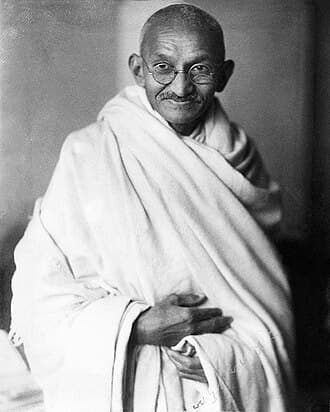
Mahatma Gandhi1869–1948 · Lawyer, leader of India’s independence movement
1893
Removed from a train
A young lawyer in South Africa, he was thrown off a first-class compartment because of his race. He resolved to resist, without hatred.
Where it began
Mahatma Gandhi1869–1948 · Lawyer, leader of India’s independence movement
1906–14
Resistance, then agreement
Years of disciplined, non-violent protest ended at the negotiating table, with an agreement that repealed a hated tax.
Trait · Principled
Mahatma Gandhi1869–1948 · Lawyer, leader of India’s independence movement
1917
Thousands of testimonies
Asked to help indigo farmers, he first recorded thousands of their statements. The evidence won an official inquiry, and he sat on it.
Trait · Prepared
Mahatma Gandhi1869–1948 · Lawyer, leader of India’s independence movement
1930
A walk to the sea
Against a tax on salt, he walked some 240 miles to the coast and picked up a handful. The world understood at once.
Trait · Symbolic
Mahatma Gandhi1869–1948 · Lawyer, leader of India’s independence movement
1931
At the table as an equal
Months later the Viceroy negotiated with him directly. Prisoners were freed, and coastal villagers allowed to make salt.
Trait · Prepared
Mahatma Gandhi1869–1948 · Lawyer, leader of India’s independence movement
1942
Two words
His demand to the British was reduced to two words, “Quit India”, which every village could understand and repeat.
Trait · Clear
The four traitsPrincipled: the means are as honest as the ends. Prepared: facts and alternatives gathered before the talking starts. Symbolic: turns a cause into an image anyone can grasp. Clear: a demand simple enough for a whole nation to carry.
04 · Three skills, one capability
One wins the room. One shapes the deal. One gives people a reason to care.
Most people have one of the three. A strong case without fair terms collapses; fair terms without a story never find support; a story with no ask changes nothing.
Skill 01 · Influence
Frictionless Commitment Engineering
Advocating for an idea so that others see their own interest in it, and commit.
Why would this matter to them, not just to me?
Skill 02 · Leverage
Asymmetric Position Engineering
Structuring agreements from a position of prepared strength, so that outcomes are fair and good.
What will I do if we don’t agree?
Skill 03 · Narrative
Identity Story & Movement Architecture
Crafting stories that make complex ideas simple, align emotion, and move people to act together.
If they remember one sentence, what should it be?
05 · Skill one · Influence
Skill 01
Frictionless Commitment Engineering
Turning passing interest into firm commitment, by showing people what the idea does for them.
Skill 01 · Four moves
Frictionless Commitment Engineering
1
Understand what they need
What does this person need, in their own words?
2
Speak to their interests
Why would this matter to them, not just to me?
3
Show, don’t claim
What evidence could they see for themselves?
4
Ask for a clear commitment
What exactly am I asking them to do, and by when?
Influence begins with listening, not speaking. The practitioner learns what the other person needs, in that person’s own words, and only then shows how the idea serves it.
1 · Understand what they need
Ask before proposing. The most persuasive thing you can say is often an accurate summary of what the other person wants.
2 · Speak to their interests
Translate the idea into the other person’s priorities. The same proposal can be about safety, savings or pride.
3 · Show, don’t claim
A demonstration, a pilot or a visit persuades more than any description. Let people reach the conclusion themselves.
4 · Ask for a clear commitment
Interest fades. A specific, modest request turns goodwill into action while it is still warm.
06 · A life built on influence
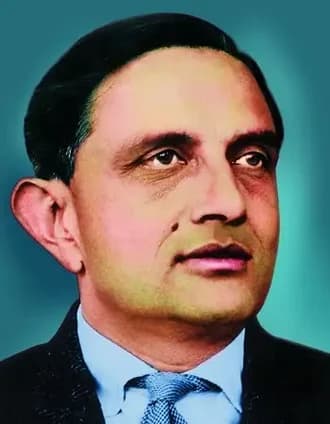
Dr Vikram Sarabhai1919–1971 · Physicist, founder of the Indian space programme
A poor, newly independent country had every reason to call a space programme a luxury. He persuaded it otherwise by making the case in the nation’s own terms. His path follows the skill’s four moves:
Move 1 of 4
Understand what they need
What does this person need, in their own words?
In Sarabhai’s lifeA new nation, short of food and schools, did not need prestige. He listened to what it did need: communication, weather warnings, and a way to teach villages far from any school.
Move 2 of 4
Speak to their interests
Why would this matter to them, not just to me?
In Sarabhai’s lifeThe best launch site was a seaside church and the village around it. He explained to the bishop what the station would mean for the country; the congregation agreed to move, and the church became its first office and laboratory.
Move 3 of 4
Show, don’t claim
What evidence could they see for themselves?
In Sarabhai’s lifeHe did not argue that satellites could teach; he arranged to prove it. An experiment agreed with NASA later broadcast lessons to thousands of villages.
Move 4 of 4
Ask for a clear commitment
What exactly am I asking them to do, and by when?
In Sarabhai’s lifeHe asked for specific institutions, not general support: a national space committee in 1962, and a space research organisation in 1969.
What followed
He made the case for space in the language of a nation’s everyday needs.
The organisation he founded now launches satellites that forecast cyclones, connect classrooms and guide fishing boats home.
07 · Skill two · Leverage
Skill 02
Asymmetric Position Engineering
Negotiating from prepared strength: knowing your alternatives, their interests, and what a fair deal looks like.
Skill 02 · Four moves
Asymmetric Position Engineering
1
Look behind positions
What do they actually need, beneath what they ask for?
2
Widen the options
What could we both gain that neither has asked for?
3
Know your alternative
What will I do if we don’t agree, and what will they?
4
Close on fair terms
Could each side defend this agreement to the people it answers to?
The most useful distinction in negotiation: every demand has a position and an interest behind it.
PositionWhat they ask for.
The demand on the table.
InterestWhy they ask.
The need beneath it, often shareable.
A common confusionLeverage is often mistaken for toughness. The strongest negotiator is usually the calmest one, because they have prepared a good alternative and have no need to bluff.
08 · Watch it work
Read it as you normally would. Then keep scrolling.
The school needs buses for a term of trips. A second operator has also sent a quoteALTERNATIVE. The current operator’s buses stand idle every afternoonHIDDEN INTEREST. The school has told everyone it must decide by FridayDEADLINE. The school wants flexible dates; the operator wants guaranteed bookingsTRADEABLE DIFFERENCE. And the transport office publishes a standard rate per kilometreFAIR STANDARD.
1Alternatives
2Hidden interests
3Deadlines
4Tradeable differences
5Fair standards
A contract, describedReading
The school needs buses for a term of trips, and the current operator has asked for a large increase. A second operator has also sent a quoteALTERNATIVE, which nobody has mentioned. The current operator’s buses stand idle every afternoonHIDDEN INTEREST, once the morning runs are done. The school has told everyone it must decide by FridayDEADLINE, including the operator. The school wants flexible dates; the operator wants guaranteed bookingsTRADEABLE DIFFERENCE, and would take a lower rate for a whole term fixed in advanceTRADEABLE DIFFERENCE. And the transport office publishes a standard rate per kilometreFAIR STANDARD.
Most readers see a routine argument about price.
Five signals show where the leverage lies:
1
Alternatives
What each side can do if there is no agreement.
In the contract: A real second quote means the school can walk away calmly. Left unmentioned, it is strength unused.
2
Hidden interests
What the other side needs, beneath what it asks for.
In the contract: Idle buses earn nothing. The operator needs afternoon work more than it needs a higher price.
3
Deadlines
Whose clock is running, and who knows it.
In the contract: By announcing its own deadline, the school has handed the operator time to wait it out.
4
Tradeable differences
Things the two sides value differently, which can be exchanged.
In the contract: Certainty matters more to the operator than to the school. Fixed dates can buy a better rate.
5
Fair standards
An outside measure both sides can accept.
In the contract: A published rate turns “your price is too high” into a question of fact, not of will.
09 · A negotiation, day by day
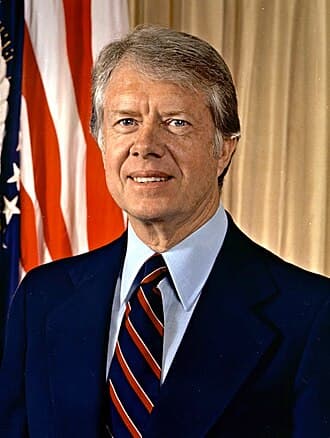
Jimmy Carter1924–2024 · President, Nobel Peace laureate
Day 1: Deadlock. Anwar Sadat and Menachem Begin arrived with fixed positions. Within days their meetings became so bitter that they stopped meeting face to face. The move: Where it began.
Days 3–5: Look behind positions. Carter kept them apart and listened to each. Beneath Egypt’s demand for every inch of the Sinai lay sovereignty and dignity; beneath Israel’s refusal lay security. The move: Look behind positions.
Days 6–10: Widen the options. The Americans drafted a single text and carried it between the two cabins, revising it more than twenty times. The Sinai would return to Egypt, and stay demilitarised for Israel’s security. The move: Widen the options.
Day 11: Know the alternative. Sadat prepared to leave. Carter went to him and set out, calmly, what failure would cost Egypt and its friendships. Sadat stayed. The move: Know your alternative.
Day 13: Close on fair terms. On the thirteenth day both leaders signed the Camp David Accords. The peace treaty that followed in 1979 has held for more than four decades. The move: Close on fair terms.
Day 1
Deadlock
Two leaders, four wars between their nations, and talks that had stalled.
The moveWhere it began
Day 1Day 7Day 13
In September 1978 he brought the leaders of Egypt and Israel, whose countries had fought four wars in thirty years, to a retreat in the hills for thirteen days. Keep scrolling and watch the rings grow.
Day 1
Deadlock
Anwar Sadat and Menachem Begin arrived with fixed positions. Within days their meetings became so bitter that they stopped meeting face to face.
Move · Where it began
10 · Skill three · Narrative
Skill 03
Identity Story & Movement Architecture
Crafting the story that makes an idea simple, memorable, and worth acting on together.
Skill 03 · Four moves
Identity Story & Movement Architecture
1
Find the one idea
If they remember one sentence, what should it be?
2
Make it concrete
What image makes it impossible to misunderstand?
3
Connect to shared values
What does my audience already believe that this fulfils?
4
Give people a part
What can each listener do tomorrow?
People forget arguments and remember stories. The practitioner builds the story deliberately: one idea, made concrete, tied to what the audience already values, with a part for everyone to play.
A common confusionNarrative is often mistaken for spin. Spin hides the truth; a good narrative makes the truth easy to see and hard to forget.
11 · A life built on narrative
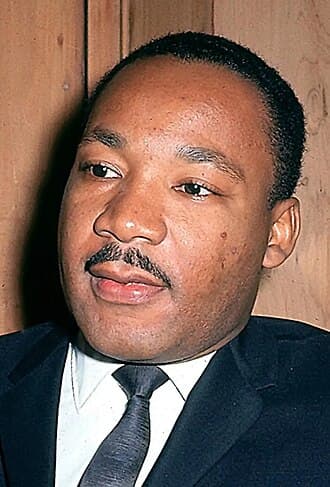
Dr Martin Luther King Jr.1929–1968 · Minister, civil rights leader
The injustice was well documented. What changed a nation was the way he told it: as a promise the country had made to itself, and not yet kept. His path follows the skill’s four moves:
Move 1 of 4
Find the one idea
If they remember one sentence, what should it be?
In King’s lifeHis speech of August 1963 is remembered by four words he returned to again and again: “I have a dream.”
Move 2 of 4
Make it concrete
What image makes it impossible to misunderstand?
In King’s lifeInstead of an abstract right, he described his own four children, judged one day by the content of their character.
Move 3 of 4
Connect to shared values
What does my audience already believe that this fulfils?
In King’s lifeHe called the nation’s founding words a promissory note, and asked the country to honour its own signature.
Move 4 of 4
Give people a part
What can each listener do tomorrow?
In King’s lifeIn the bus boycott of 1955–56, tens of thousands walked or shared rides for more than a year. Everyone had a part to play.
What followed
He turned a list of demands into a story a nation could join.
The Civil Rights Act followed in 1964 and the Voting Rights Act in 1965. He received the Nobel Peace Prize at thirty-five.
12 · What it isn’t
Four common misreadings.
Tap each one to see what is true instead.
13 · Where it travels
Every serious field runs on it.
Medicine
Helping a patient choose the treatment that will save them.
Science
A finding matters once others are persuaded to test it.
Law
The case that is argued, and the settlement that is reached.
Public life
Turning a policy into a story people can carry.
Diplomacy
Agreements both sides can defend at home.
Enterprise
The partner who says yes, and the customer who stays.
More lives that show it
Medicine · 1840sIgnaz Semmelweis
Proved that handwashing saved mothers’ lives, but could not persuade his colleagues. The evidence waited decades for someone who could make the case.
Science · 1960sRachel Carson
Turned years of research on pesticides into a book the public could not put down, and changed how nations protect their land.
Public life · 1840sFrederick Douglass
Escaped slavery and became the most persuasive speaker of his age, making his own life the argument no audience could dismiss.
14 · How we develop it
Trained the way experts train.
01A negotiation journal
What each side wanted, what was agreed, and why it held or did not.
02Lives, studied closely
Read move by move, alongside conversations with leaders about agreements they won.
03Practised conversations
Role-played negotiations and pitches, with feedback on preparation and listening.
04Reflection and portfolio
Every cycle ends in a documented case, so progress is visible over time.
Listen→Prepare→Propose
How it grows
Listen. Prepare. Persuade.
1Listen
Learns to state the other side’s interests so well that they agree with the summary.
2Prepare
Knows their alternative, the other side’s, and a fair standard before any conversation starts.
3Persuade
Makes a real case to a real organisation, and comes back with a clear commitment.
One cycle, four weeks
Week 1ConceptA position vs an interest.
Week 2EncounterA leader describes a hard agreement.
Week 3ExerciseA role-played negotiation, with a walk-away.
Week 4ReflectionOne idea, one story, one clear ask.
15 · Try it yourself
Four places. Where is the leverage?
Each place holds one note from a child’s observation journal. Tap a place, name the signal, then see how the same moment reads with and without the capability. Take sixty seconds, or as long as you like.
Infusion Leaders coachAsk me anything about Persuasion & Negotiation Leverage. These are the questions parents ask most.
Isn’t teaching persuasion teaching manipulation?
The opposite. Children learn to make fair cases, and to notice when pressure or tricks are being used on them.
My child is not a confident speaker.
Much of the skill is preparation and listening, which quiet children often do best. Confidence follows preparation.
Where would a child negotiate?
Everywhere: group projects, club budgets, shared rooms, deadlines. The stakes are small, which is exactly why now is the time to practise.
How can progress be seen?
Through their preparation notes, practised conversations and the agreements they reach on real projects.
What can we do at home?
Before any request they make, ask: “What do they really want?” and “What would you do if they said no?”
17 · To keep
If you remember five things.
1 / 5
Interest is not commitment; ask clearly.
2 / 5
Know your alternative before you negotiate.
3 / 5
Look behind positions for interests.
4 / 5
One idea, made concrete, tied to shared values.
5 / 5
All of it can be trained.
The next step
Where does your child already win people over?
Every child leans towards some capabilities before they’re ever taught. The Discovery Profile finds where yours already leads, across all eight, in five minutes.