In a changing world, the most valuable skill is learning the next one.
It is not chasing every new gadget, or working longer hours. It is learning fast and well, and building things that keep working when you are not there.
Learn quickly
Speed of learning comes from method: foundations first, practice early, and teaching what you learn.
As the world changes
Fields, tools and careers change within a working life. The ability to relearn is what lasts.
Multiply
Leverage means output that grows faster than effort: one hour of work that keeps paying back for years.
Tools, systems and people
Code, media, capital and teams are all multipliers. Each lets one person reach much further.
02 · Why it matters
The world keeps changing. So must the learner.
Three things are true of every career that will begin in the next decade.
01 / 03
Knowledge now dates quickly.
Much of what is learned for a career will change before the career ends. The ability to relearn will not.
02 / 03
Learning speed can be trained.
Fast learners are rarely geniuses. They use a method: foundations, practice, feedback, teaching.
03 / 03
Leverage multiplies effort.
A tool, a system or a team can turn one person’s hour into a thousand hours of result.
The tools of every profession are changing faster than at any time before. Children who learn how to learn, and how to multiply their own effort, will not be anxious about that change. They will be the ones using it.
03 · What adaptability looks like
Adaptability isn’t drifting. It has four visible traits.
Curious
Quick to learn
Adapts
Multiplies
One life shows all four. Tap the right side to move on, the left to go back.
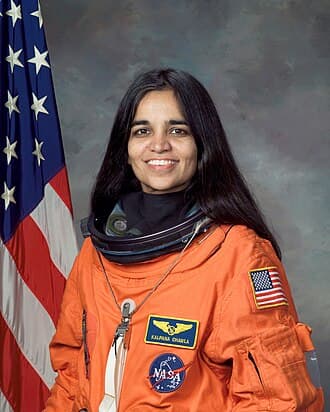
Dr Kalpana Chawla1962–2003 · Aerospace engineer, astronaut
1970s
A girl who drew aeroplanes
As a schoolgirl in a small town she drew aircraft in class, and watched the planes at the local flying club.
Where it began
Dr Kalpana Chawla1962–2003 · Aerospace engineer, astronaut
1982
An unusual choice
She studied aeronautical engineering, among the very first women on that course, when few thought it a sensible choice for a girl.
Trait · Curious
Dr Kalpana Chawla1962–2003 · Aerospace engineer, astronaut
1982–88
A new country, a new field
She moved abroad and completed a master’s degree and then a doctorate in aerospace engineering within six years.
Trait · Quick to learn
Dr Kalpana Chawla1962–2003 · Aerospace engineer, astronaut
1988–94
Engineer, then pilot
Working on the flow of air around aircraft, she also qualified to fly aeroplanes, gliders and seaplanes, and to teach others to fly.
Trait · Adapts
Dr Kalpana Chawla1962–2003 · Aerospace engineer, astronaut
1997
First flight
She flew in space, the first woman born in India to do so, operating the shuttle’s robotic arm.
Trait · Quick to learn
Dr Kalpana Chawla1962–2003 · Aerospace engineer, astronaut
2003
A reach beyond her
She died when Columbia broke up on its return. Scholarships, schools and a satellite now carry her name, and her example.
Trait · Multiplies
The four traitsCurious: drawn to what is not yet understood. Quick to learn: masters new fields with method, not luck. Adapts: changes the route, never the destination. Multiplies: her work keeps reaching far beyond her.
04 · Two skills, one capability
One learns the new thing fast. The other makes one person’s work reach thousands.
Learning without leverage stays small. Leverage without learning is soon out of date. The capability joins them.
Skill 01 · Learning
Hyper-Speed Skill Acquisition
Absorbing and applying new knowledge quickly, so that change becomes an advantage rather than a threat.
What are the few ideas everything else rests on?
Skill 02 · Leverage
Asymmetric Output Multiplying
Using multipliers such as technology, media, capital and other people, so that individual effort scales far beyond itself.
What could I build once that keeps working?
05 · Skill one · Learning
Skill 01
Hyper-Speed Skill Acquisition
Learning new things quickly and well, with a method, so that change becomes an advantage rather than a threat.
Skill 01 · Four moves
Hyper-Speed Skill Acquisition
1
Master the foundations
What are the few ideas everything else rests on?
2
Learn by doing
What can I try today, rather than only read about?
3
Borrow from other fields
What does another field already know about this?
4
Teach what you learn
Could I explain this simply to someone else?
Fast learners are rarely faster thinkers. They use a better method: foundations first, practice early, feedback often, and teaching what they learn.
1 · Master the foundations
Every field rests on a handful of core ideas. Learn those deeply first, and the rest arrives faster.
2 · Learn by doing
Practice exposes gaps that reading hides. Start using the knowledge before it feels complete.
3 · Borrow from other fields
Many new problems are old problems in different clothes. Knowledge from one field often unlocks another.
4 · Teach what you learn
Explaining shows exactly what you have not yet understood, and fixes it in memory.
A common confusionHyper-Speed Skill Acquisition is often confused with cramming. Cramming is quick to learn and quick to forget. This method is built for knowledge that lasts, and that can be used.
06 · A life built on learning
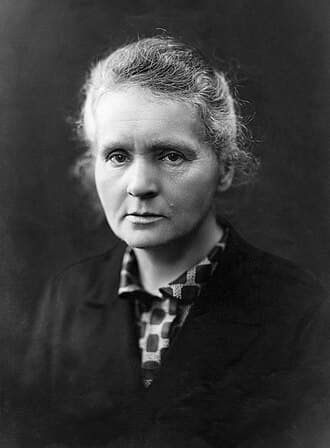
Marie Curie1867–1934 · Physicist and chemist, Nobel laureate twice
She arrived at university older than her classmates and behind them, in a language not her own. She learned each new field fast enough to change it. Her path follows the skill’s four moves:
Move 1 of 4
Master the foundations
What are the few ideas everything else rests on?
In Curie’s lifeAt twenty-four she started university behind her classmates in French, mathematics and physics. She worked at the foundations, and within three years finished first in physics.
Move 2 of 4
Learn by doing
What can I try today, rather than only read about?
In Curie’s lifeFor her doctorate she chose an unexplored subject, the strange rays given off by uranium, and learned it by measuring them, day after day.
Move 3 of 4
Borrow from other fields
What does another field already know about this?
In Curie’s lifeShe treated the rays as a property of atoms themselves, borrowing physics to answer a chemist’s question, and found two new elements: polonium and radium.
Move 4 of 4
Teach what you learn
Could I explain this simply to someone else?
In Curie’s lifeIn the First World War she learned radiology, trained about a hundred and fifty women to take X-rays, and took mobile X-ray units to the front.
What followed
She learned each new field fast enough to change it.
She remains the only person to win Nobel Prizes in two different sciences: physics in 1903 and chemistry in 1911.
07 · Skill two · Leverage
Skill 02
Asymmetric Output Multiplying
Using multipliers, from technology and media to other people, so that one person’s effort reaches far beyond itself.
Skill 02 · Four moves
Asymmetric Output Multiplying
1
Find the repeated effort
What am I doing by hand that could be done once, for everyone?
2
Build it once
What could I make today that keeps working tomorrow?
3
Choose the multiplier
Could a tool, a medium or other people carry this further?
4
Keep the human part human
Which part of this needs me, and which does not?
Leverage is output that grows faster than effort. The practitioner looks for work done by hand, again and again, and asks what could carry it instead.
Linear workOne hour, one result.
Stops when you stop.
Leveraged workOne hour, many results.
Keeps working without you.
A common confusionLeverage is often mistaken for doing less. It usually means more work at the start, building the tool or the system, so that far less is needed ever after.
08 · Watch it work
Read it as you normally would. Then keep scrolling.
A student runs a free maths tutoring group. She answers the same five questions for every new pupilREPEATED EFFORT. Her best explanation of fractions exists only in her headUNRECORDED KNOWLEDGE. Last year’s pupils would gladly help this year’sUNTAPPED PEOPLE. She explains each topic to one pupil at a timeONE-TO-ONE WORK. And the school already gives every student a free video toolUNUSED TOOL.
1Repeated effort
2Unrecorded knowledge
3Untapped people
4One-to-one work
5Unused tools
A tutoring project, describedReading
A student runs a free maths tutoring group after school, and the waiting list grows every week. She answers the same five questions for every new pupilREPEATED EFFORT. Her best explanation of fractions exists only in her headUNRECORDED KNOWLEDGE. Last year’s pupils would gladly help this year’sUNTAPPED PEOPLE, and several have asked how they canUNTAPPED PEOPLE. She explains each topic to one pupil at a timeONE-TO-ONE WORK. And the school already gives every student a free video toolUNUSED TOOL.
Most readers see a generous student working very hard.
Five signals show where effort could multiply:
1
Repeated effort
The same work, done by hand, again and again.
In the tutoring project: Five questions, answered afresh for every pupil. A one-page guide would answer them for good.
2
Unrecorded knowledge
Know-how that lives in one head, and could be captured once.
In the tutoring project: Her fractions explanation helps one pupil at a time. Recorded, it could help every pupil, every year.
3
Untapped people
Willing helpers nobody has asked.
In the tutoring project: Former pupils understand exactly where new ones get stuck. They are a team waiting to be formed.
4
One-to-one work
Work done for one person that could serve many at once.
In the tutoring project: Explaining a topic to one pupil at a time caps the group at her hours. Small groups would not.
5
Unused tools
A multiplier already at hand, waiting to be used.
In the tutoring project: The video tool is free and already there. It turns one explanation into an explanation for anyone.
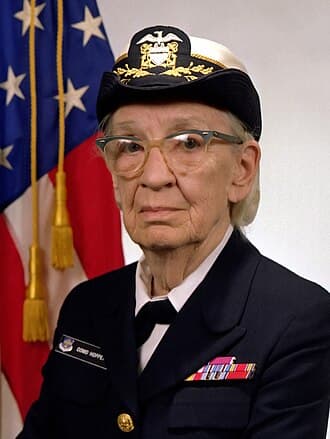
1944: By hand. She became one of the first programmers of one of the first large computers, writing every instruction by hand, in code only a specialist could read. The move: Where it began.
Late 1940s: Find the repeated effort. She noticed that programmers kept rewriting the same routines for every new problem, and began collecting them into libraries that anyone could reuse. The move: Find the repeated effort.
1952: Build it once. Told that computers could only do arithmetic, she built one of the first compilers: a program that assembled other programs from those reusable pieces. The move: Build it once.
1955–59: Choose the multiplier. Her next multiplier was language: programs written in English-like words, so that far more people could write them. The work fed into COBOL, used for decades. The move: Choose the multiplier.
1960s–86: Keep the human part human. She spent decades teaching, famously handing out a foot of wire to show how far light travels in a nanosecond. She retired from the navy at seventy-nine. The move: Keep the human part human.
1944
By hand
One of the first programmers of an early computer, writing every instruction in code.
The moveWhere it began
194419521959
When she began, computers were programmed by hand, in long strings of numbers, one instruction at a time. She spent her life making one person’s work reach further. Keep scrolling and watch the rings grow.
1944
By hand
She became one of the first programmers of one of the first large computers, writing every instruction by hand, in code only a specialist could read.
Move · Where it began
10 · What it isn’t
Four common misreadings.
Tap each one to see what is true instead.
11 · Where it travels
Every serious field runs on it.
Medicine
Knowledge moves fast; good doctors keep relearning.
Research
New fields borrow tools from old ones.
Education
One great lesson, reaching millions.
Engineering
Tools that build tools.
Public service
Services that scale to a whole nation.
Enterprise
Something made once, used by many.
More lives that show it
Printing · 1450sJohannes Gutenberg
Movable type turned a year of copying one book by hand into hundreds of copies, and let knowledge multiply across a continent.
Computing · 1840sAda Lovelace
Saw that a calculating engine could work with any symbols, even music, a century before such machines existed.
Learning · 1880s–1900sHelen Keller
Deaf and blind from infancy, she learned to read, write and speak, graduated from university, and spent her life opening doors for others.
12 · How we develop it
Trained the way experts train.
01A learning log
Each new skill tracked: how it was learned, how long it took, and what worked.
02Lives, studied closely
Read move by move, alongside conversations with builders about tools that multiplied their work.
03Build a multiplier
Each child builds one guide, tool or system that helps others without them there.
04Reflection and portfolio
Every cycle ends in a tested multiplier, so progress is visible over time.
Learn→Build→Multiply
How it grows
Learn. Build. Multiply.
1Learn
Learns a new skill in a week with a deliberate method, and records what worked.
2Build
Turns something they do by hand into a reusable guide, template or tool.
3Multiply
Grows a real project’s reach without growing their own hours.
One cycle, four weeks
Week 1ConceptWorking harder vs working on the system.
Week 2EncounterA builder shows a tool that multiplied their work.
Week 3ExerciseLearn a new tool in a week.
Week 4ReflectionOne multiplier, built and tested.
13 · Try it yourself
Four places. Where could effort multiply?
Each place holds one note from a child’s observation journal. Tap a place, name the signal, then see how the same moment reads with and without the capability. Take sixty seconds, or as long as you like.
Infusion Leaders coachAsk me anything about Adaptability & Exponential Leverage. These are the questions parents ask most.
Is this about screens and AI?
Technology is one multiplier among several. Children learn to use tools wisely, alongside systems, media and other people.
Can learning speed really be taught?
Yes. It rests on method: foundations first, early practice, quick feedback, and teaching others. Each part can be practised.
Won’t constant change unsettle my child?
The opposite. Children who know how to learn anything feel steadier, because change stops being a threat.
How can progress be seen?
Through their learning logs, and the guides and tools they build that other people actually use.
What can we do at home?
Ask two questions often: “How would you learn this in a week?” and “What could you build once that would help every time?”
15 · To keep
If you remember five things.
1 / 5
Learning speed is mostly method.
2 / 5
Foundations first, practice early, teach what you learn.
3 / 5
Look for effort repeated by hand.
4 / 5
Build it once, and let it keep working.
5 / 5
All of it can be trained.
The next step
Where does your child already learn fastest?
Every child leans towards some capabilities before they’re ever taught. The Discovery Profile finds where yours already leads, across all eight, in five minutes.